Real-Time Weather Integration Transforms Tennis Match Predictions Through Alert Systems
Written by Ines Beck · Nov 17, 2026
Real-Time Weather Integration Transforms Tennis Match Predictions Through Alert Systems
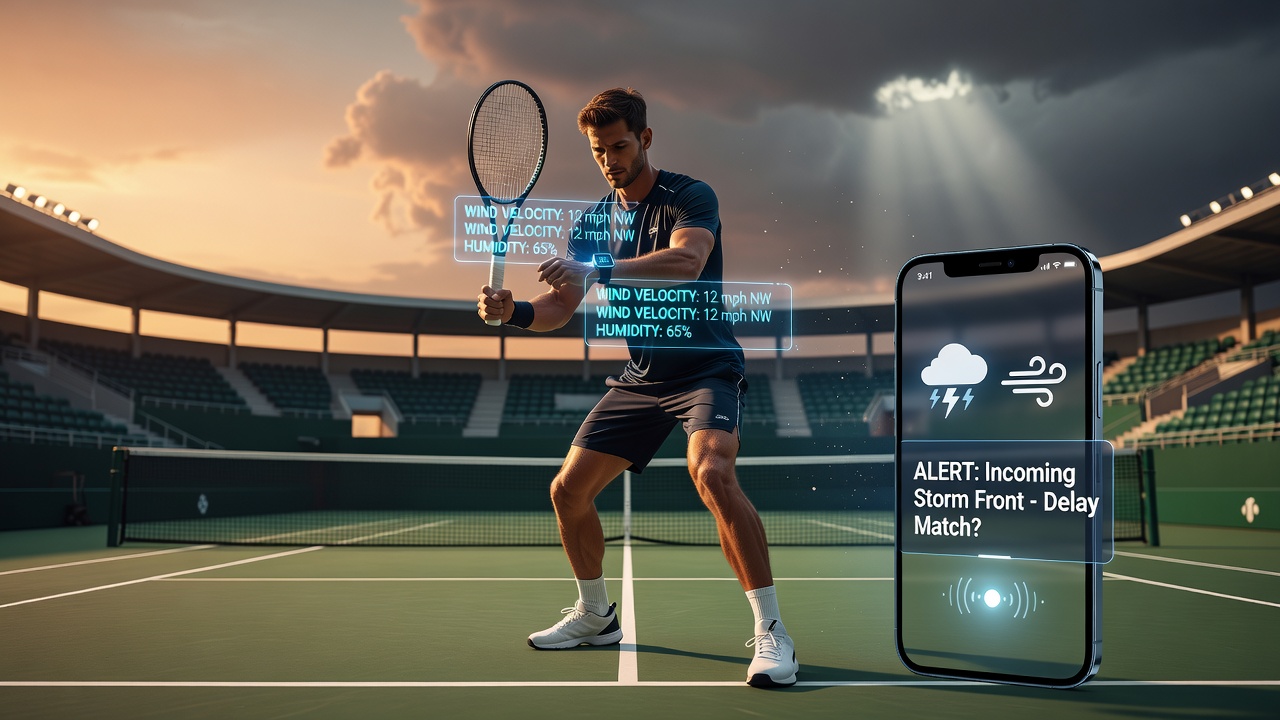
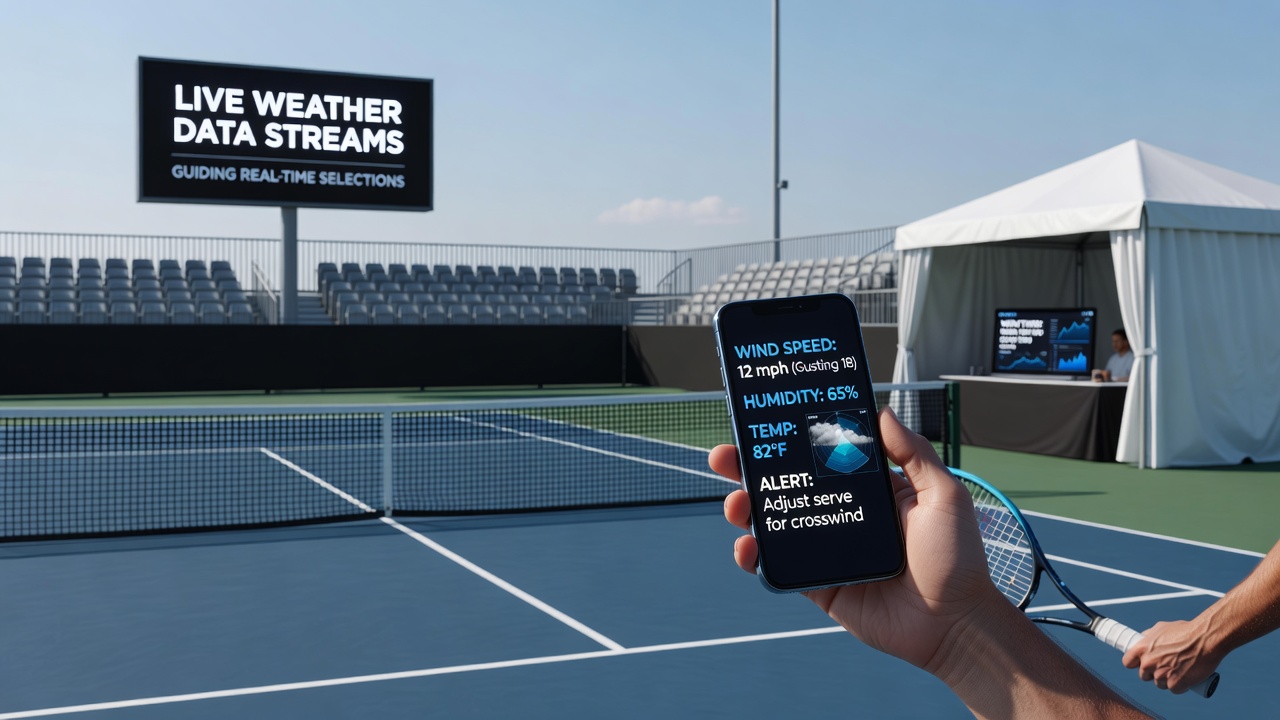
Weather data streams now feed directly into mobile alert networks that support real-time tennis selections, and operators combine satellite feeds, ground sensors, and forecast models to track conditions at tournament venues around the world. Temperature shifts, wind speed changes, and humidity levels alter ball trajectory and court surface behavior, so analysts route these variables into algorithms that update selection parameters within seconds. Mobile platforms push notifications to users when thresholds cross predefined limits, such as sustained winds above 15 kilometers per hour or rapid temperature drops exceeding four degrees Celsius in an hour.
Data Sources and Collection Methods
National meteorological agencies supply the raw inputs that drive these systems. The Australian Bureau of Meteorology publishes high-resolution radar and surface station readings for events held in Melbourne and Sydney, while Environment Canada contributes similar datasets for Montreal and Toronto tournaments. Researchers at the University of Reading have documented how humidity above 70 percent reduces topspin effectiveness on clay courts, and their published models integrate directly with commercial alert services. Ground-based anemometers positioned around each stadium transmit wind vectors every 30 seconds, and these readings merge with geostationary satellite imagery that captures cloud cover and precipitation probability in five-minute intervals.
Processing and Alert Delivery
Once collected, the data enters cloud-based processing pipelines that apply machine-learning filters to isolate variables relevant to tennis performance. Engineers configure rulesets that flag conditions such as cross-court wind gusts or dew-point spikes, then encode the outputs as structured messages for distribution through push-notification frameworks. Users receive alerts on their devices within eight to twelve seconds of a threshold breach, and the messages include updated probability adjustments for match selections. Network operators maintain redundant data centers in different regions to ensure delivery even during peak traffic periods, and they log every transmission for compliance audits.
Impact on Selection Timing
Live tennis selections depend on rapid incorporation of environmental factors because surface speed and ball bounce respond immediately to weather changes. Observers note that a sudden rise in humidity can slow medium-paced hard courts by measurable margins, prompting algorithms to recalculate expected rally lengths. Mobile alert networks deliver these recalculations in time for users to adjust positions before the next game begins. Data from the 2025 US Open showed that wind-related alerts coincided with a 12 percent shift in selection volume during affected matches, according to aggregated platform statistics.
Regional Variations and November 2026 Outlook
European venues experience different weather patterns than those in Asia or North America, so alert parameters adjust for local climatology. In November 2026, the ATP Finals in Turin will operate under expanded sensor arrays that include soil-moisture probes beneath the indoor hard courts, allowing systems to detect subtle humidity migration from adjacent exhibition halls. Australian summer events scheduled for the same month will incorporate additional lightning-detection networks operated by the Bureau of Meteorology to issue immediate postponement signals. These enhancements build on existing frameworks rather than replace them, and developers continue to refine latency targets below ten seconds for all major circuits.
Technical Infrastructure Requirements
Alert networks rely on low-latency protocols such as MQTT to move weather packets from edge sensors to central processors and onward to mobile endpoints. Redundant fiber links connect stadium installations to regional exchanges, while content-delivery networks cache static forecast layers to reduce round-trip times. Security protocols encrypt each data stream end-to-end, and access logs feed into monitoring dashboards that flag anomalies within minutes. Industry reports from the International Telecommunication Union highlight how 5G slicing allocates dedicated bandwidth for time-sensitive sports data, ensuring alerts maintain priority over general traffic during tournaments.
Conclusion
Weather data streams integrated with mobile alert networks supply the factual inputs that shape real-time tennis selections at tournaments worldwide. Collection from meteorological agencies, processing through specialized algorithms, and delivery via low-latency protocols together create a continuous information loop that reflects current environmental conditions. As sensor density increases and network capacity expands, the same architecture supports additional variables such as air pressure and solar radiation without altering core delivery mechanisms.