Decoding Timeout-Driven Shifts in Basketball Live Wagers Through Smartphone Alert Systems and Player Rotation Data
Written by Ines Beck · Oct 6, 2026
Decoding Timeout-Driven Shifts in Basketball Live Wagers Through Smartphone Alert Systems and Player Rotation Data
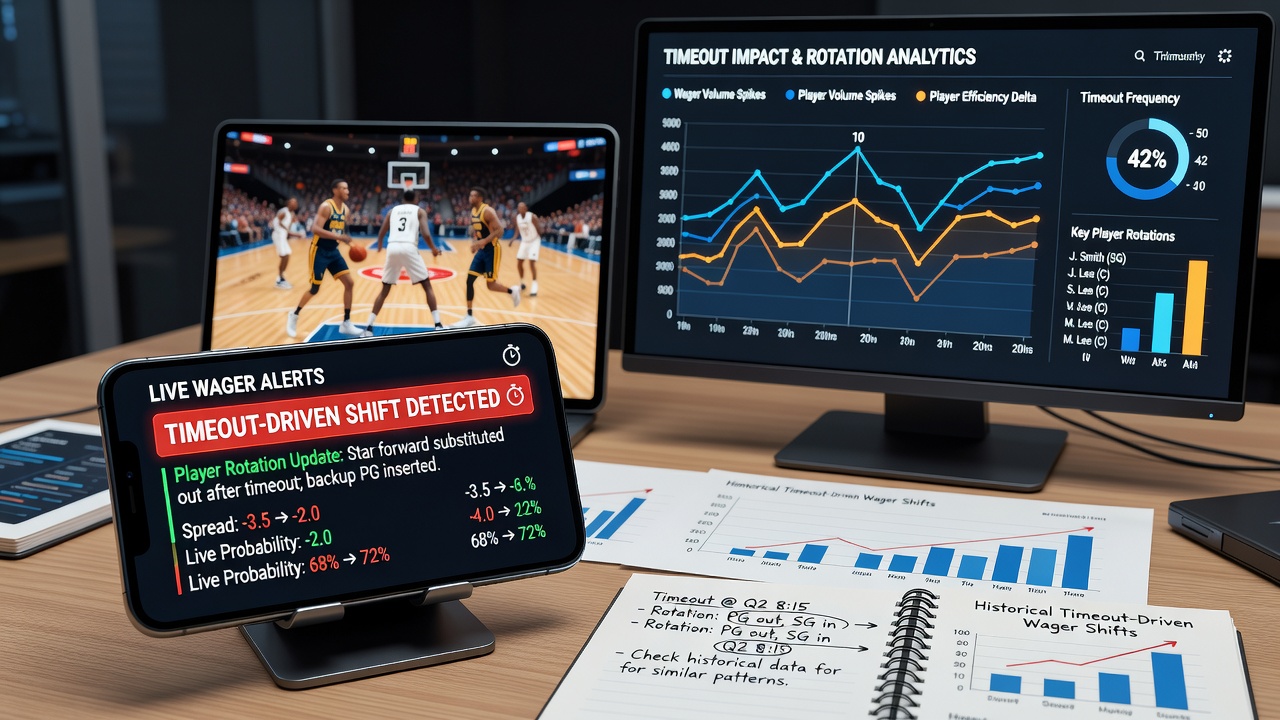
Basketball timeouts create measurable disruptions in game flow that directly affect live wagering markets, and these moments generate rapid updates to odds across major betting platforms when combined with detailed player rotation tracking. Data from professional leagues shows that coaches use timeouts to alter lineups, shift defensive schemes, and manage player fatigue, all of which alter expected scoring rates and possession efficiency in the subsequent minutes of play.
Timeout Patterns and Their Impact on Game Metrics
Professional basketball games average between 8 and 12 official timeouts per contest depending on the league and overtime situations, with each stoppage lasting between 30 seconds and 2 minutes according to official rules from the National Basketball Association. During these intervals teams frequently substitute multiple players, which changes on-court combinations and modifies team performance indicators such as points per possession and defensive rating. Live betting operators adjust spreads, totals, and player prop markets within seconds of these substitutions because historical datasets demonstrate consistent correlations between specific lineup changes and scoring outcomes over short game segments.
Analysts track these adjustments through official play-by-play feeds that log every substitution alongside timeout timestamps, creating datasets that power predictive models used by both bettors and oddsmakers. One league report covering the 2025-2026 season found that teams introducing their primary defensive unit after a timeout reduced opponent scoring efficiency by an average of 4.2 points per 100 possessions in the following five-minute window.
Smartphone Alert Systems and Real-Time Data Delivery
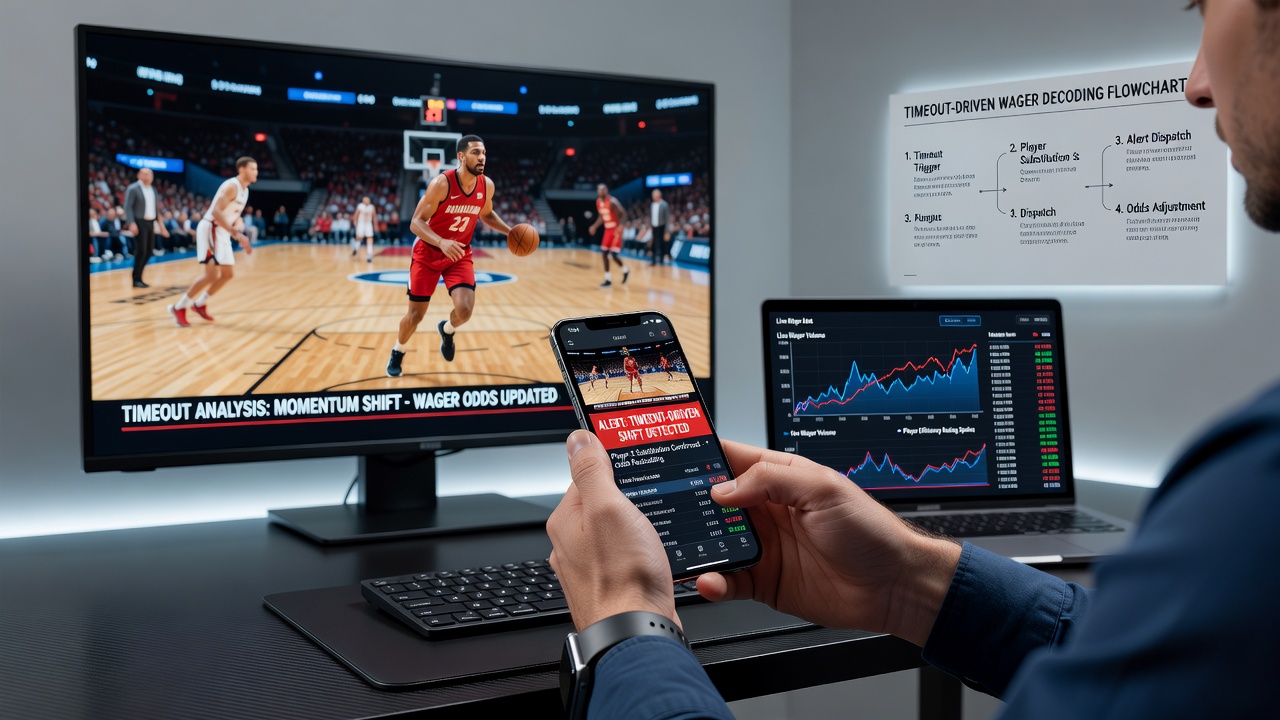
Mobile applications now push notifications that combine timeout occurrences with immediate rotation updates, allowing users to receive alerts when key players enter or exit games during these breaks. These systems pull from multiple data sources including league APIs and third-party tracking services to deliver combined information within 5 to 10 seconds of each event. Bettors receive details such as which five players are now on the floor, recent performance trends for those combinations, and suggested wager adjustments based on pre-built algorithms.
Platform operators in North America and Europe report increased engagement during timeout periods when alerts highlight rotation impacts, with session data indicating higher volumes of in-game wagers placed in the 30 to 60 seconds following notification delivery. The integration of push technology with structured rotation databases enables faster market reactions than was possible through manual score monitoring alone.
Integrating Rotation Data with Live Wager Adjustments
Advanced tracking systems record every substitution and pair it with contextual game state information such as score differential, time remaining, and foul trouble status, which improves the accuracy of live odds models. Research conducted by the National Basketball Association analytics department demonstrates that certain five-player units maintain consistent offensive and defensive efficiencies across multiple seasons when controlling for opponent strength. Live betting systems incorporate these unit-specific metrics to recalculate probabilities immediately after each rotation change triggered by a timeout.
Operators also monitor coaching tendencies across different game situations, noting that some teams favor specific substitution patterns when protecting leads or chasing deficits. These patterns appear in aggregated datasets covering thousands of games, allowing algorithms to assign weighted probabilities to upcoming scoring outcomes based on the current lineup on the floor. Canadian regulatory frameworks administered through the Alcohol and Gaming Commission of Ontario require operators to maintain transparent records of how such data feeds influence market movements during live events.
Case Examples from Recent Seasons
During October 2026 regular season openers, multiple teams displayed pronounced rotation shifts after first-quarter timeouts that correlated with measurable changes in betting market activity. One Eastern Conference matchup showed a 12-point swing in the total points market within 90 seconds after a defensive substitution package entered the game, with alert systems notifying users of the lineup change seconds before odds moved. Similar patterns appeared in Western Conference contests where back-to-back timeout rotations altered three-point shooting percentages enough to shift spread markets by half a point or more.
University studies examining player tracking data have confirmed that fatigue management through targeted substitutions produces predictable effects on second-half performance, particularly when teams face back-to-back games during condensed schedules. Observers note these effects become more pronounced in October when rosters adjust to new season workloads and coaching staffs test different unit combinations early in the campaign.
Conclusion
Timeout-driven rotation changes continue to represent a core mechanism through which live basketball wagering markets respond to real-time game developments, with smartphone alert systems serving as the primary delivery channel for rotation data that informs those adjustments. League tracking statistics and operator records demonstrate consistent relationships between substitution patterns and subsequent scoring outcomes, enabling data-driven responses across betting platforms. As tracking technology and notification systems advance, the precision of these market reactions is expected to increase based on expanding historical datasets from professional competitions.